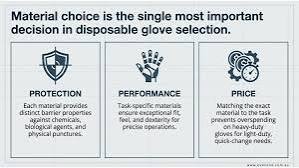
The Impact of Material Selection on Disposable Glove Performance
Disposable glove performance depends heavily on the materials manufacturers use during production. Different materials offer different levels of protection, flexibility, durability, and comfort. Therefore, choosing the right glove material is essential for healthcare workers, laboratory technicians, food handlers, and industrial employees. The correct choice helps workers perform daily tasks while maintaining suitable hand protection.
Businesses often compare several options before selecting gloves for their operations. Understanding the properties of https://www.glovesupply.us/ can help buyers identify products that match their workplace requirements. Material selection also influences how gloves respond to moisture, chemicals, friction, and repeated hand movements.
How Material Types Affect Disposable Glove Performance
Nitrile, latex, and vinyl are common materials used to manufacture disposable gloves. Each option has distinct characteristics that influence its suitability for different tasks.
Nitrile gloves contain synthetic rubber that provides good resistance to punctures and many oils. These properties make them useful in medical examinations, laboratory procedures, automotive work, and other environments where reliable hand protection matters. However, their resistance to specific chemicals depends on the glove’s formulation, thickness, and exposure conditions.
Latex gloves offer excellent elasticity and a close fit. Their flexibility allows users to perform tasks that require precise finger movements, making them useful in many healthcare and examination settings. However, natural rubber latex proteins can trigger allergic reactions in some individuals. Workplaces must consider this risk when choosing gloves for employees and visitors.
Vinyl gloves generally cost less and can suit lower-risk activities, including certain food preparation and cleaning tasks. However, they typically provide less elasticity and puncture resistance than nitrile or latex gloves. Their suitability depends on the level of protection required for the intended activity.
The Role of Thickness and Durability
Material type is only one factor that determines disposable glove performance. Thickness also affects how a glove handles pressure, friction, and potential punctures. Thicker gloves may offer greater physical resistance in some situations, while thinner options can support better tactile sensitivity during delicate tasks.
However, thickness alone does not guarantee effective protection. Manufacturing quality, material consistency, glove design, and correct sizing also influence performance. A poorly manufactured glove may develop weak points even when its material appears suitable.
Workers should select gloves according to the hazards they may encounter. For chemical handling, employers need to check compatibility information for the specific chemical and glove model. They should also follow manufacturer guidance on exposure time, replacement intervals, and safe removal.
Comfort and Fit Influence Workplace Efficiency
Comfort affects how easily workers can complete tasks throughout a shift. Gloves that fit correctly allow natural hand movements and reduce unnecessary strain. In contrast, gloves that are too tight may restrict movement, while oversized gloves can reduce grip and make precise activities more difficult.
Material flexibility plays an important role in this process. Nitrile and latex often provide a closer fit than conventional vinyl gloves, although actual performance varies by product design. Workers should consider finger length, palm width, cuff fit, and the demands of their tasks when selecting a size.
For businesses reviewing disposable glove material selection, balancing comfort with protection can improve usability without overlooking safety requirements. Employees should also change gloves when they become damaged, contaminated, or unsuitable for continued use.
Choosing Materials for Specific Workplace Needs
Different workplaces require different glove characteristics. Healthcare facilities may prioritize barrier protection, fit, and compatibility with medical procedures. Food businesses need gloves suitable for their intended food-contact applications and must follow applicable hygiene requirements. Laboratories and industrial sites may require specialized materials selected according to chemical exposure, puncture risks, or other hazards.
Cost should not be the only deciding factor. A lower-priced glove may be unsuitable if it lacks the required protection or fails to support the task. Buyers should review product specifications, relevant standards, chemical compatibility data, and manufacturer instructions before making a decision.
Evaluating these factors together helps organizations choose disposable gloves that align with operational demands, employee comfort, and workplace safety procedures.